A material palette that belongs together
Find a coherent direction without making every surface compete for attention.
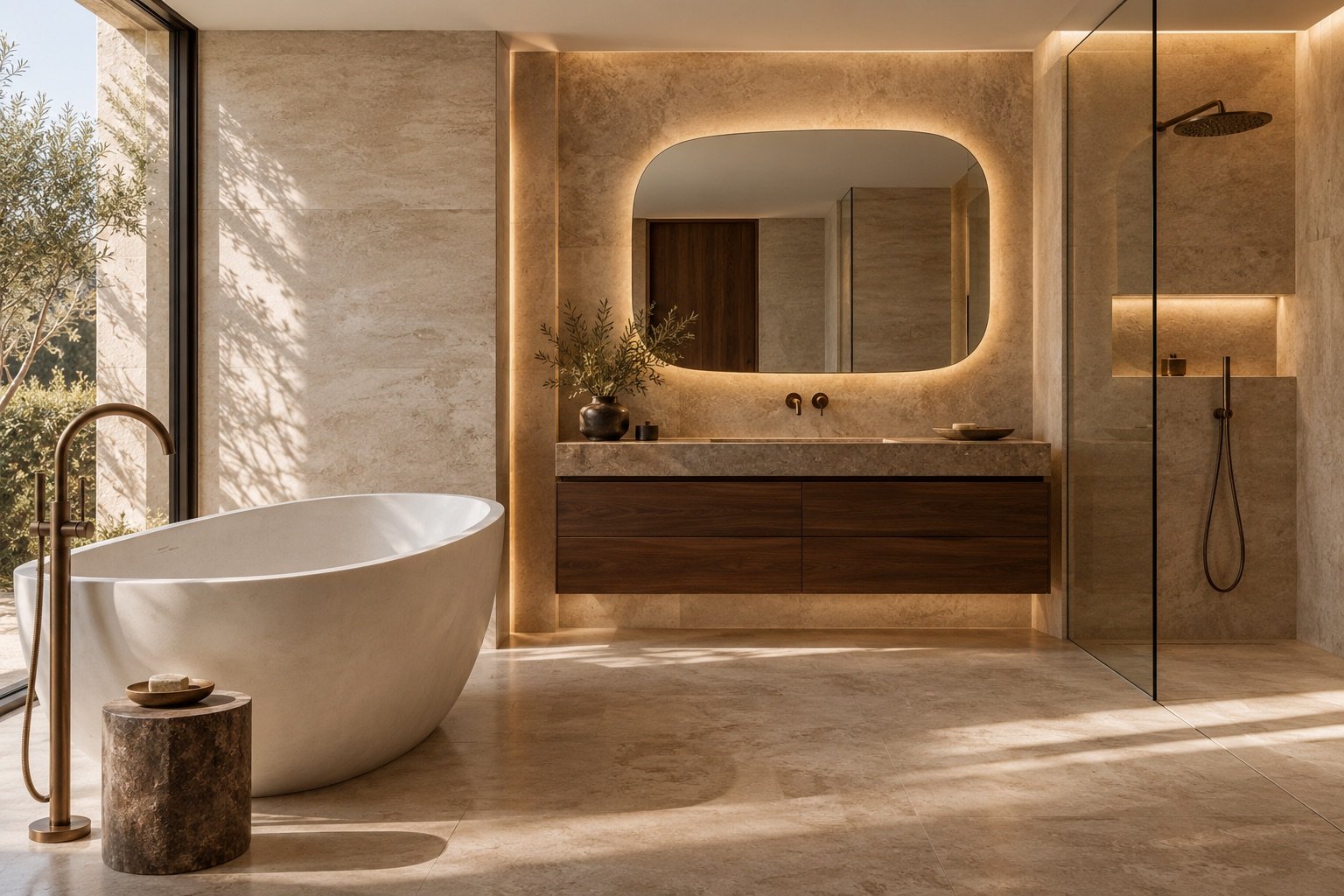
Choose an anchor material
Start with the surface that occupies the most visual space: often the floor or main wall tile. Compare its undertone with timber, paint and metal samples before committing to the smaller details.
View samples in the room
Natural light, artificial light and surrounding colours change how a finish appears. Put samples side by side in the actual room and revisit them at different times of day. A screen image is a useful reference, not a colour guarantee.
Balance texture and maintenance
A textured wall, brushed metal or natural stone can add depth, but each has care requirements. Ask about suitable cleaners, sealing and the effect of regular moisture before selecting a finish.
Resolve the joins
Look at grout, trims, thresholds and the edge of a niche. These small transitions decide whether the palette feels coordinated. Record product names and finishes so the agreed specification is unambiguous.
Put the ideas into your brief.
Keep your priorities in one place, then review and download your plan. No enquiry is submitted by this demonstration.
Start your project brief